STAGE: Personalized OTT for Bharat
Stage is a regional SVOD OTT platform with 4M+ subscribers. A core challenge was 58% of trial users declined autopay, citing a lack of relevant content despite a large library. This project aimed to solve this by improving content personalization and engagement.
“The recommendation engine was only as good as its input data. No feedback loop = no personalization = continued churn.”
TL;DR
- 01Shipped binary feedback UI across Mobile, Web, and Android TV.
- 02Resolved iconography ambiguity through on-ground usability testing.
- 03Established the direct data pipeline required to train the ML model.
00 Overview & Business Problem
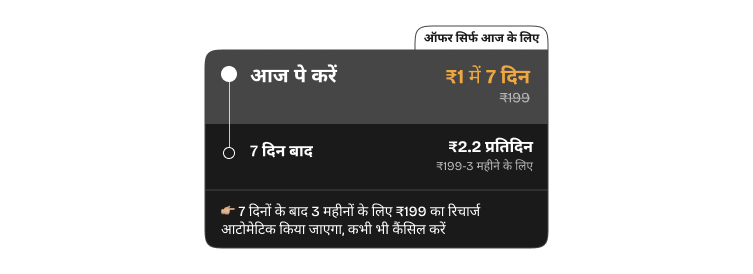
Stage is a regional SVOD OTT platform with 4M+ subscribers. A core challenge was 58% of trial users declined autopay, citing a lack of relevant content despite a large library. This project aimed to solve this by improving content personalization and engagement.
The Constraint
"The feedback UI couldn't disrupt the primary viewing experience. Placement had to feel contextual — not forced."
01 My Role & Team
As a Product Designer, I drove this initiative, focusing on competitive audit, research, wireframing, prototyping, usability testing, and dev handoff.
I collaborated with a Senior Product Designer, Product Manager, and 6 Developers.
Research & Audit
Competitive audit across 6+ SVOD platforms. Recommendation engine model research.
Design & Prototype
Wireframing, prototyping, and usability testing across all platforms.
Dev Handoff
Semantic component specs. Direct collaboration with 6 engineers across 3 platforms.
02 Research & Insights
We conducted extensive secondary research, including a competitive audit of 6+ leading SVOD platforms to analyze content surfacing strategies.
We also researched recommendation engine models (Collaborative, Content, Hybrid Filtering) to inform our personalization strategy.
Collaborative Filtering
Recommends based on what similar users liked. Strong for cold-start but requires volume.
Content Filtering
Recommends based on attributes of content the user has engaged with. Needs explicit signals.
Hybrid Filtering
Combines both approaches. The target model — but requires clean explicit feedback data to function.
03 Strategic Need for Explicit Feedback
Our existing recommendations lacked objective cues. Explicit feedback (like/dislike) was identified as the 'ultimate source of truth' for user interest, serving as the backbone for a robust recommendation engine, and directly improving retention and conversion.
We proposed two feedback collection methods: simple voluntary interactions for overall satisfaction, and objective Likert scales for ML algorithms. We aligned with stakeholders to prioritize a user-friendly, industry-standard interaction model for higher adoption.
5-Point Likert Scale
Nuanced but confusing. Middle ratings gave the ML model ambiguous signals and users frequently skipped it.
04 User Flows & Touchpoints
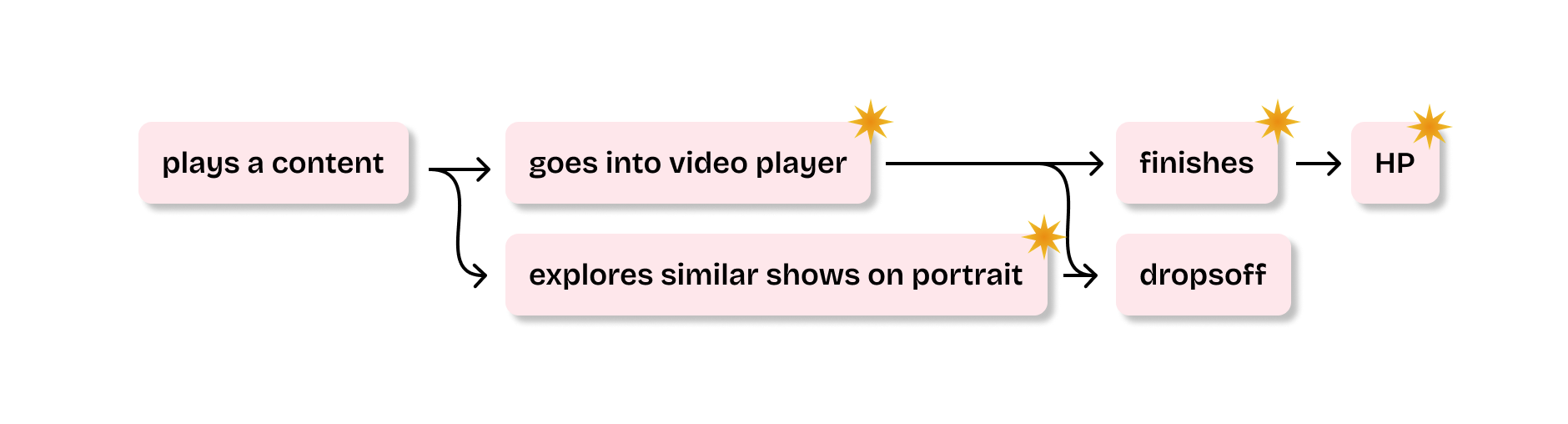
User flows were designed to integrate feedback collection seamlessly into key user journeys, such as post-content viewing and on content detail screens, based on competitive analysis.
05 Icon Research & Usability Testing
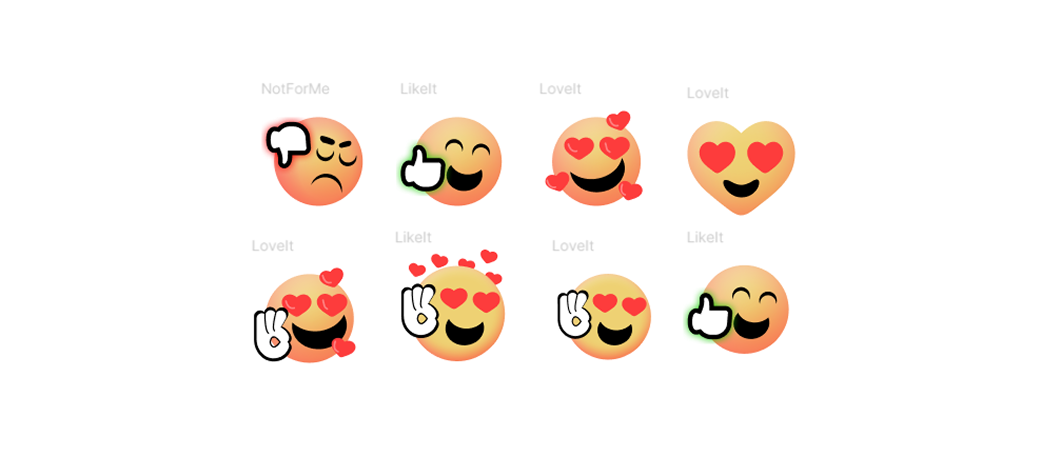
A rigorous on-ground research (two rounds) was conducted to identify culturally appropriate and intuitive icons for our regional audience. This directly impacted usability and data quality.
Abstract icons caused measurable hesitation — users associated up/down arrow patterns with volume, not sentiment. We iterated until icons had zero ambiguity.
2 Test Rounds
On-ground sessions with regional users before shipping. Not assumptions — actual observation.
Icon Clarity
Iterated until icons had zero ambiguity. Any hesitation = failed test.
Data Integrity
Culturally accurate icons = accurate ML training data. Bad icons = corrupted signals.

06 Design Details: Final UI
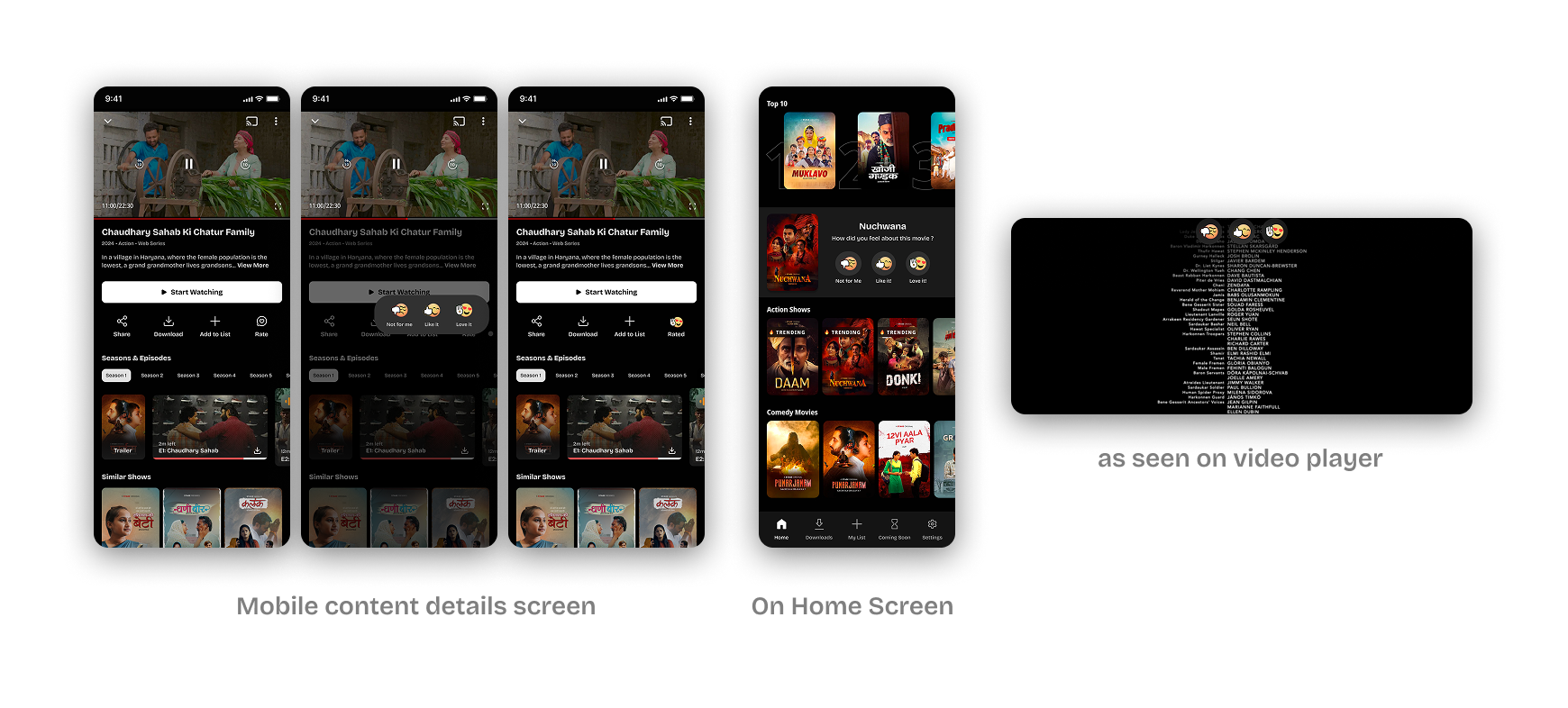
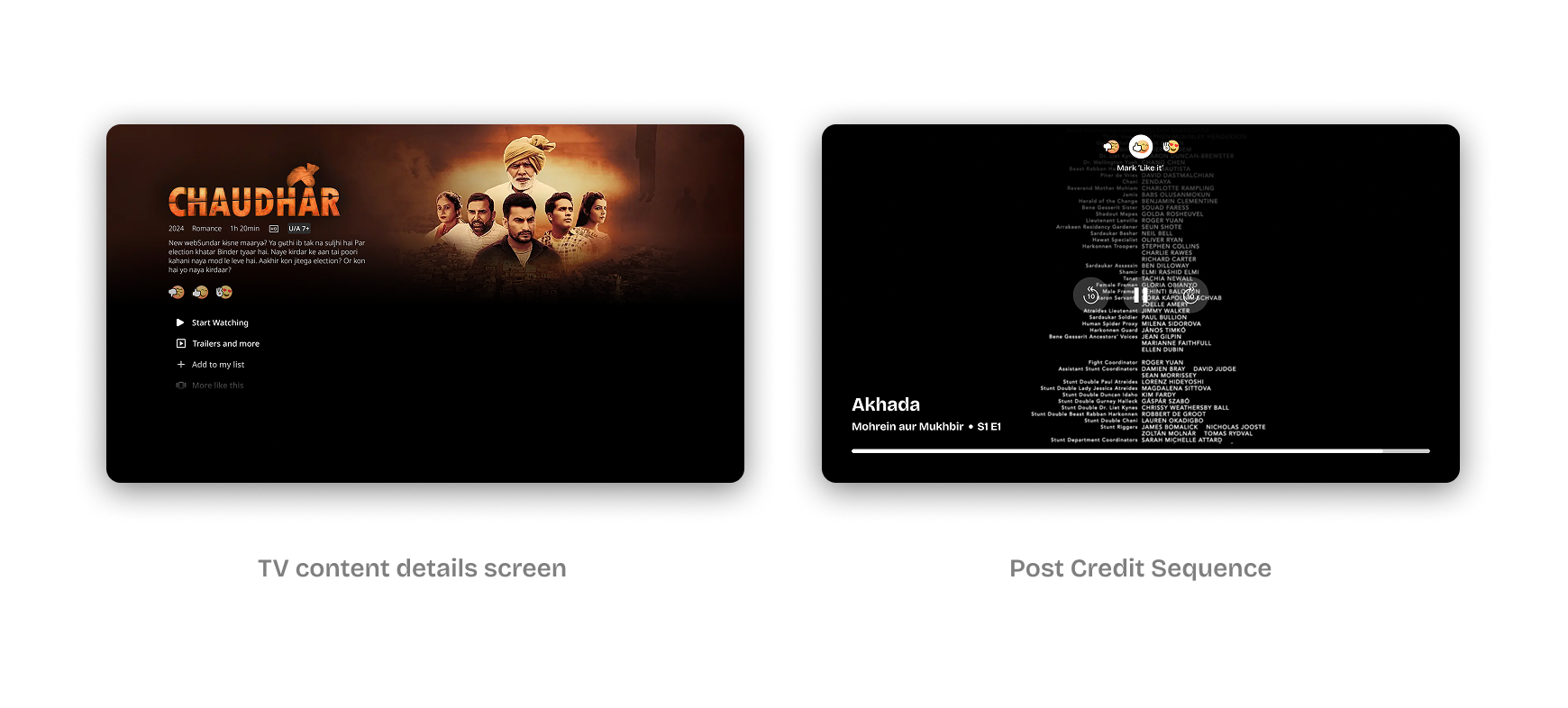
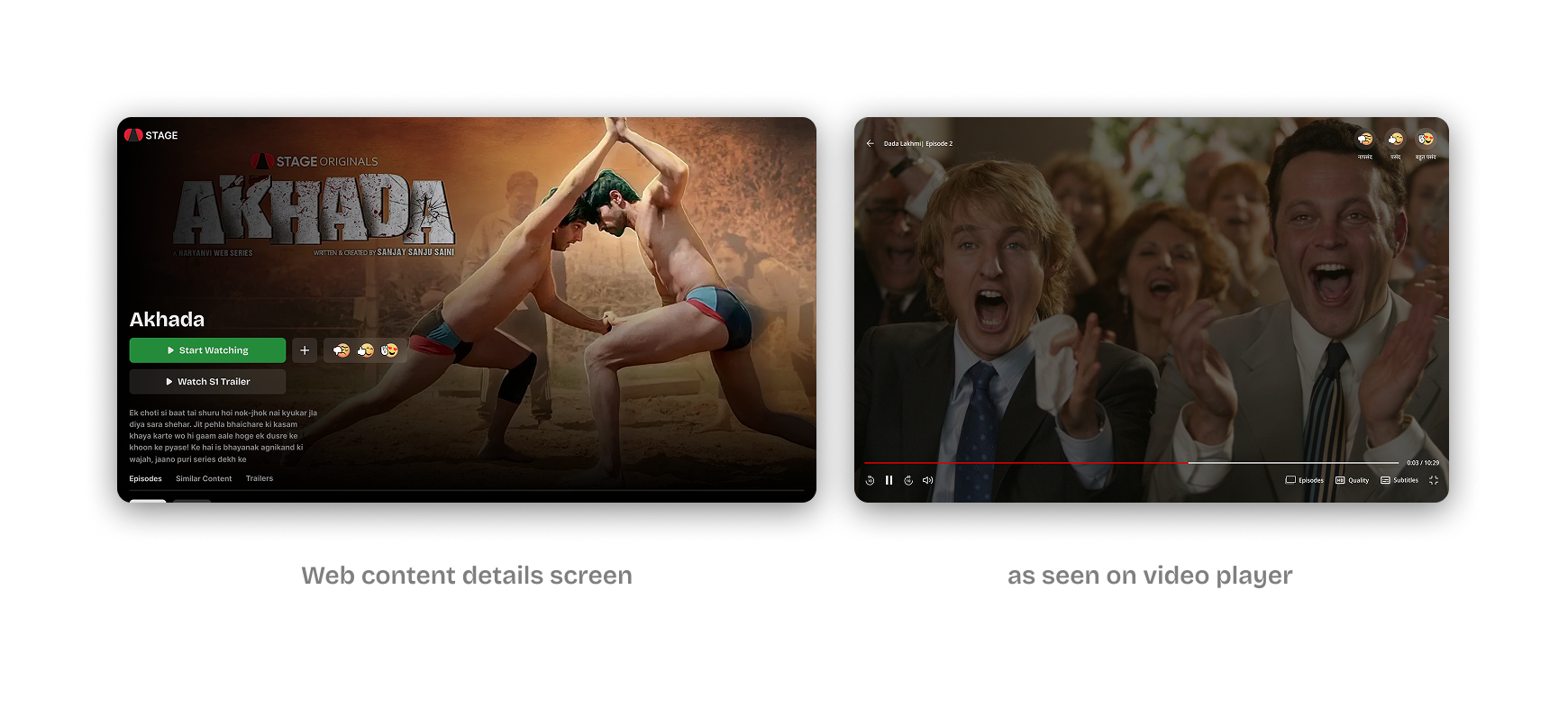
The final UI was designed for seamless integration and ease of use across Mobile, Web, and TV. Strategic placement on content detail screens, within the video player, and on home screens ensures intuitive user interaction.
07 Outcome & Impact
This feedback mechanism is a foundational element for Stage's growth. By collecting direct user preferences, we've established a crucial data source for our recommendation engine, leading to:
Better Recommendations
More precise and personalized content discovery.
Enhanced Engagement
Increased time on platform due to relevant content.
Improved Retention
Reduced trial-to-paid subscriber churn.
Increased Conversions
Directly impacting business goals.
Design Manager Takeaway
"The project required cross-functional coordination, culturally nuanced research, multi-platform systems thinking, and an engineering-first handoff approach. It shipped. It works. The data flows."
The feedback loop is the product.
Without reliable explicit signals, no recommendation engine can work. Shipping this system — cleanly, across three platforms — directly enabled Stage to attack the 58% trial drop-off.